Who forms a group’s core?
Musicians appearing on several successive records create observable continuity, even when the line-up name changes.
JazzMesh stories
Follow continuity, line-up changes and the movement of repertoire.
This section follows jazz through time: who stays in a line-up, who arrives or returns, and how a standard moves between recordings. It makes continuity legible without erasing change.
Three ways to follow time
Musicians appearing on several successive records create observable continuity, even when the line-up name changes.
A new credit can open another collaboration circle, but it must be read alongside its date and documented role.
By separating the musical work from its recordings, then comparing performers, dates and documented contexts.
Stories
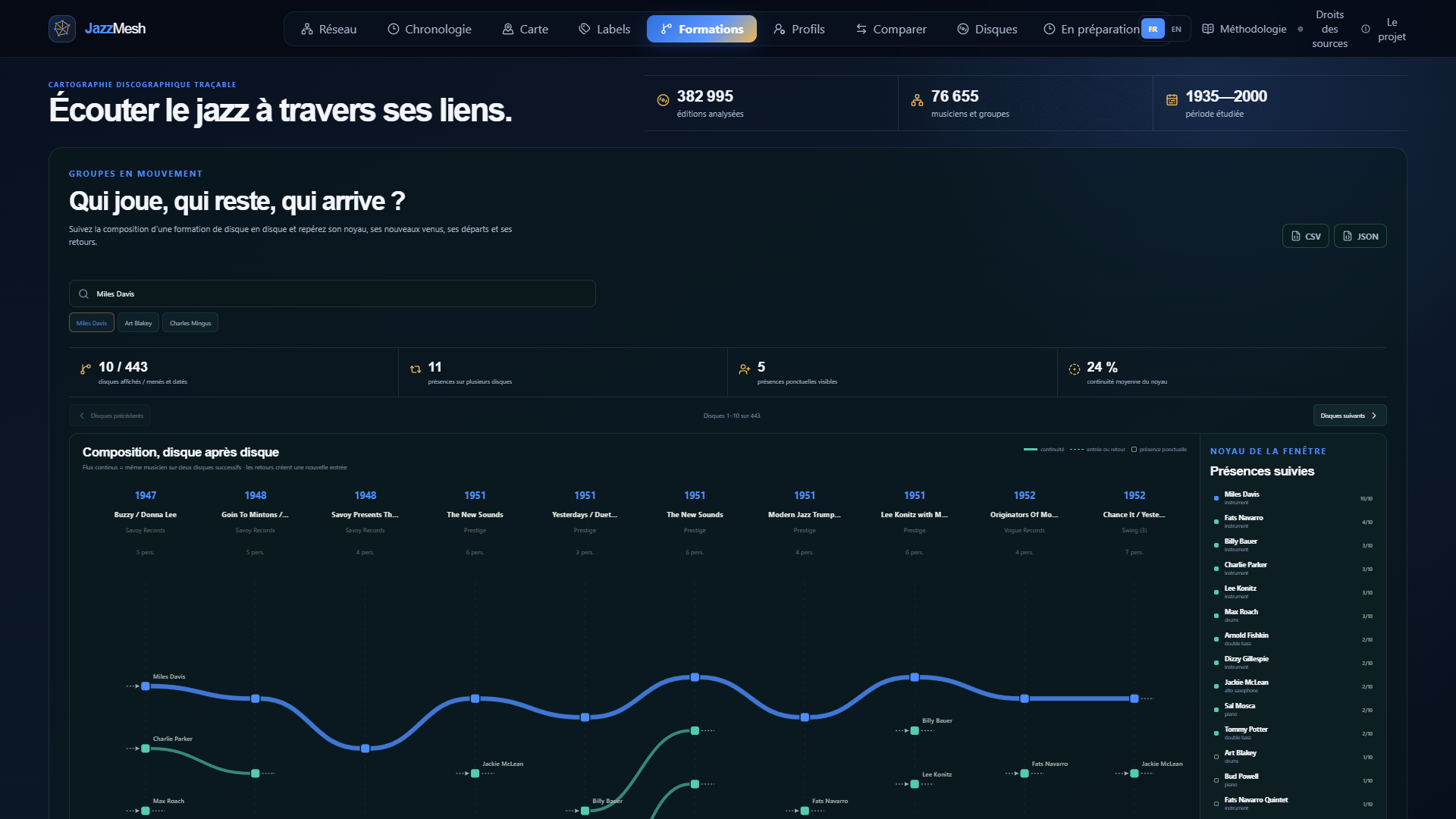
Read continuity, arrivals and returns without confusing release chronology with studio chronology.
Read the storyStories

From bebop to the electric groups, the graph reveals less a sequence of styles than an exceptional ability to bring together, separate and recirculate communities of musicians.
Read the story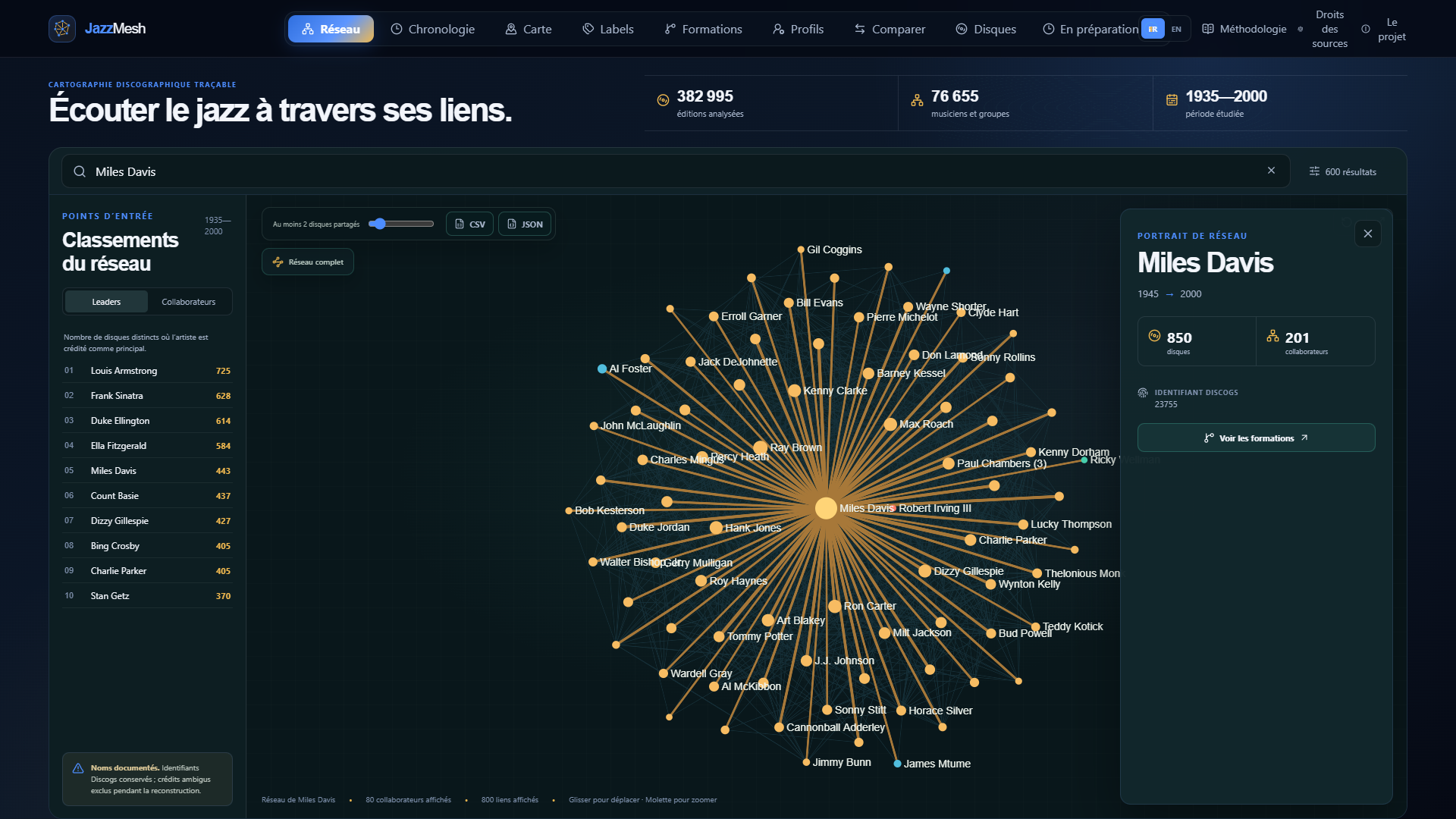
A four-movement guide to starting with a familiar name without remaining inside one discography.
Read the story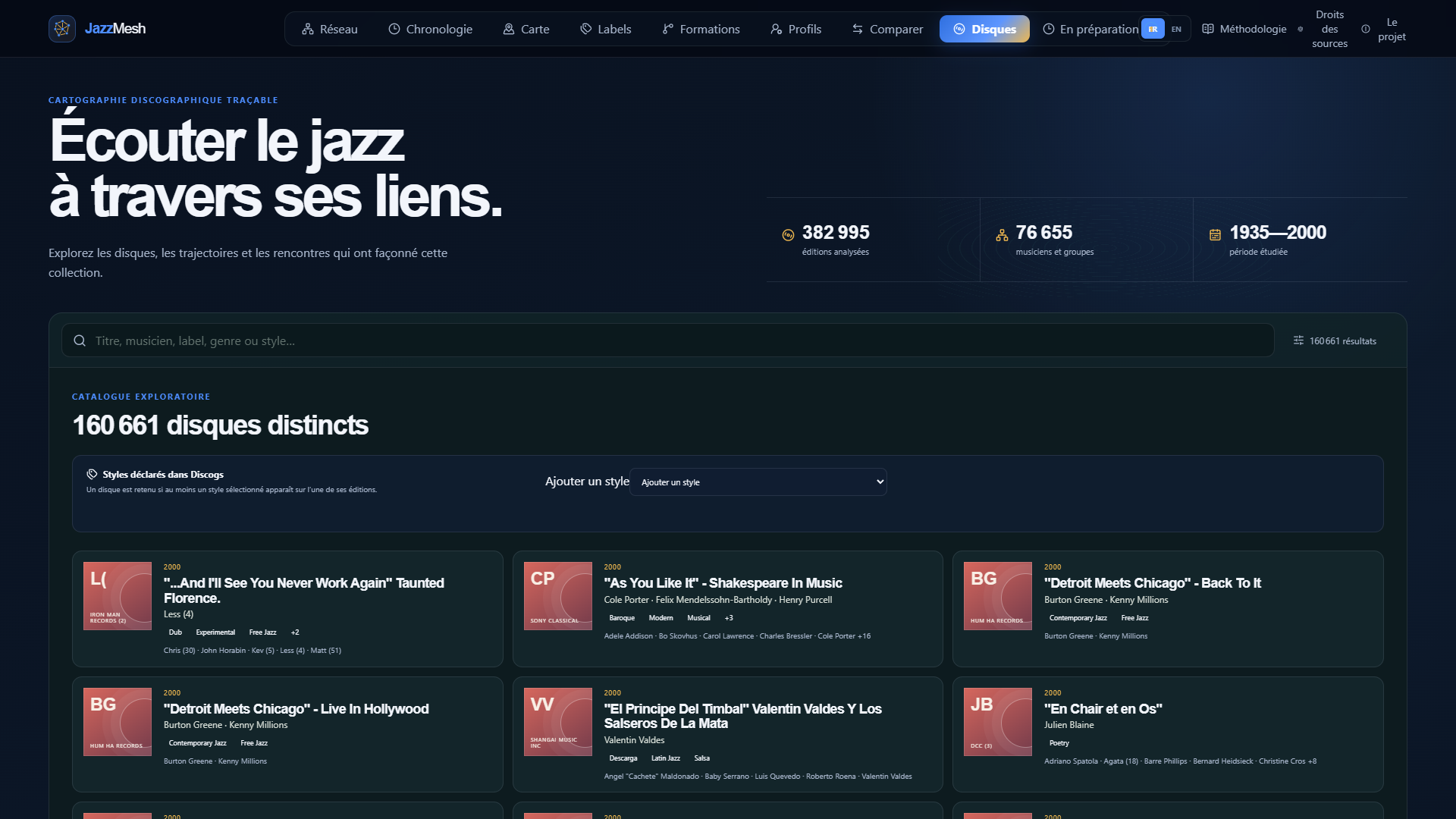
Start with a record you love, read its credits and branch into another musical story.
Read the story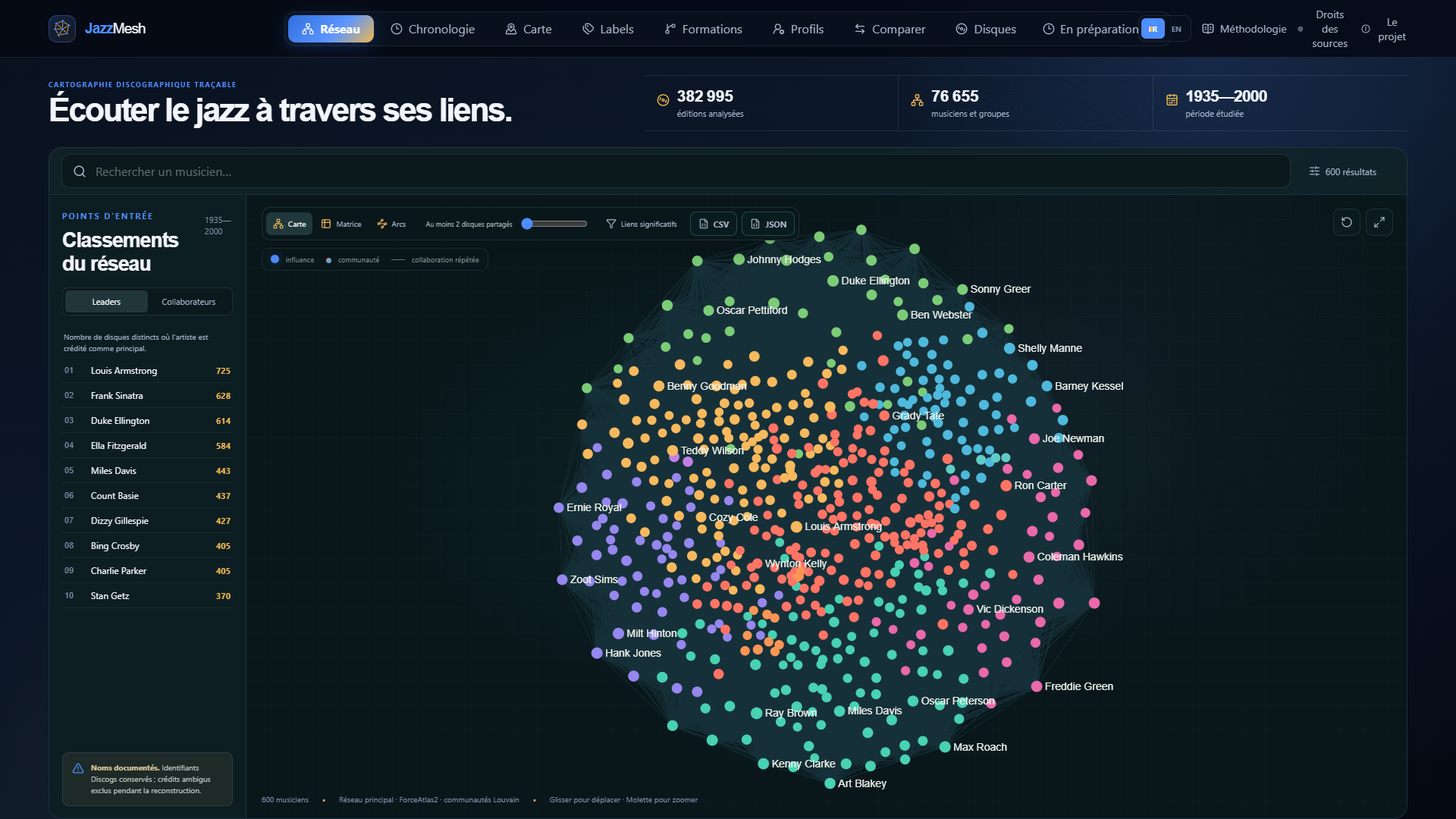
Why some musicians connect distant-looking communities—and what the graph can genuinely support.
Read the story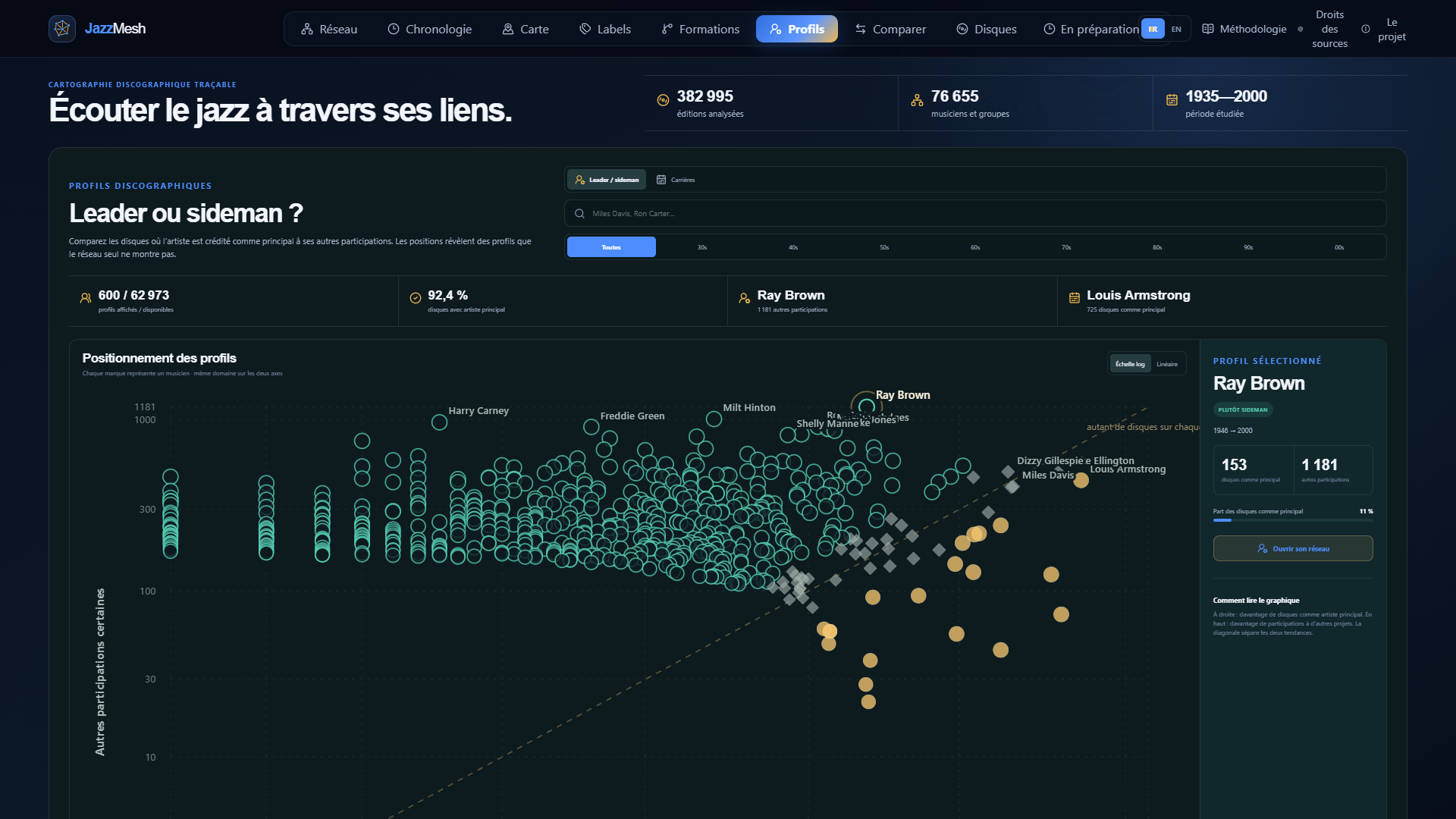
Leader, collaborator, group and role: what metadata can support—and what it leaves unsaid.
Read the story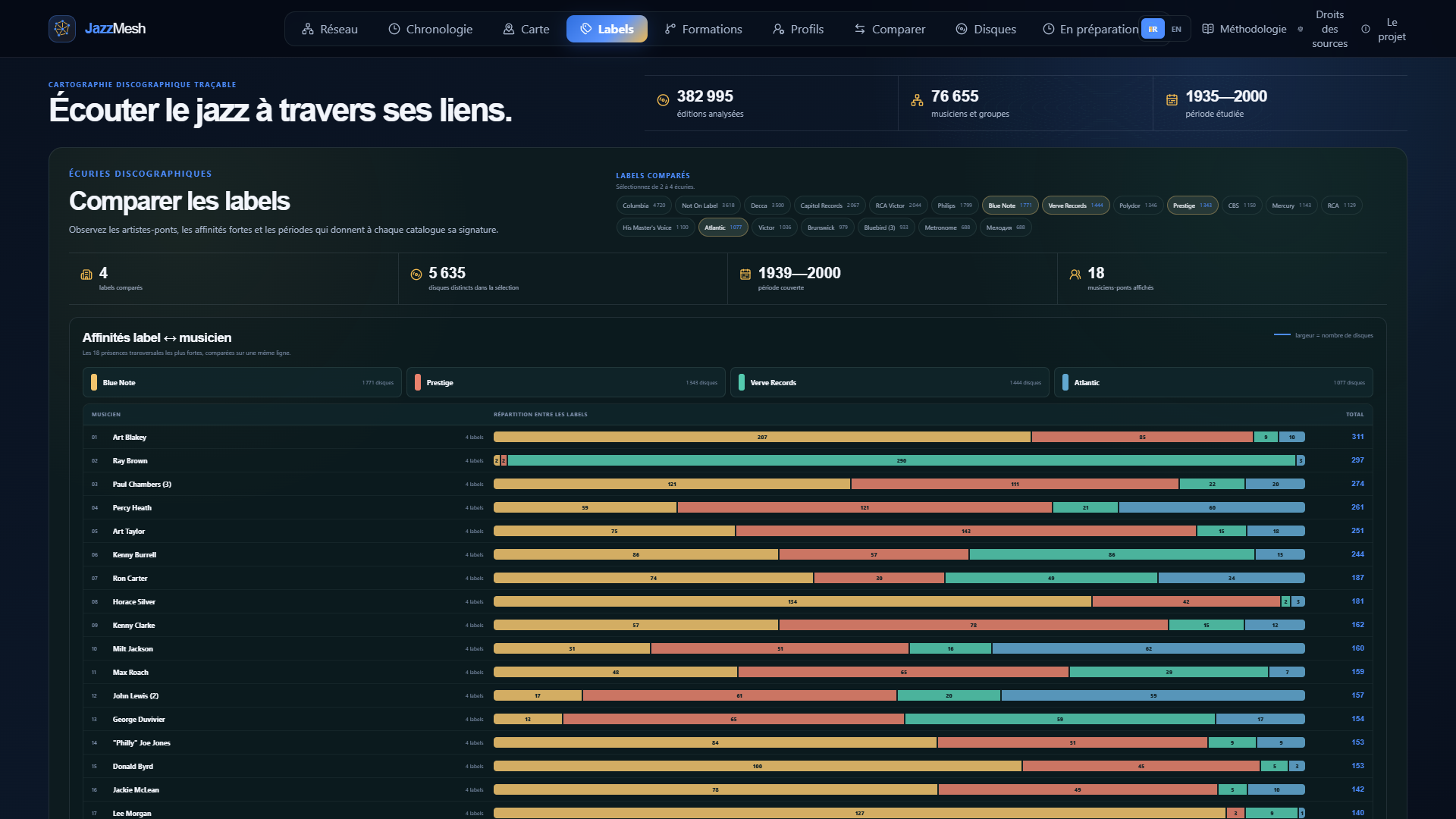
Compare catalogues without reducing their identity to a volume ranking.
Read the storyUnderstand the difference between 659,484 observed editions and 334,465 grouped discographic objects.
Read the storyFrom data dump to visualisation: the decisions that make an exploration explainable and revisable.
Read the story