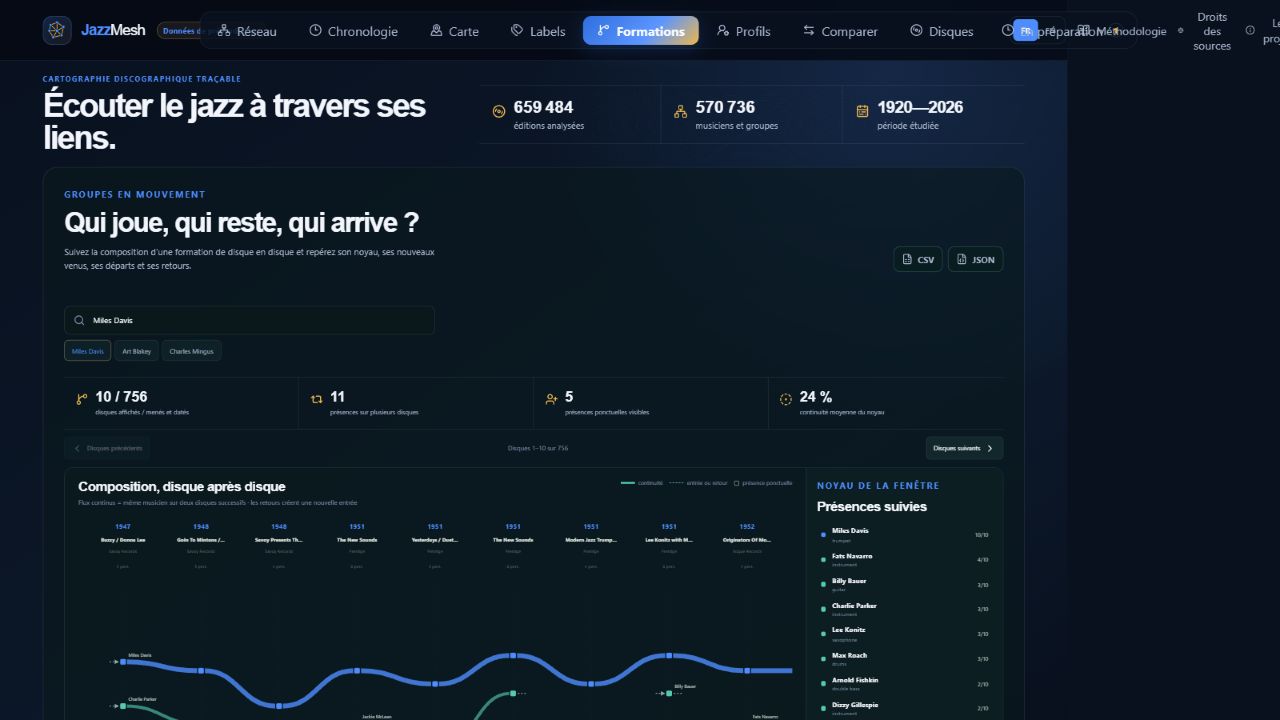
Begin with the neighbourhood, not a ranking
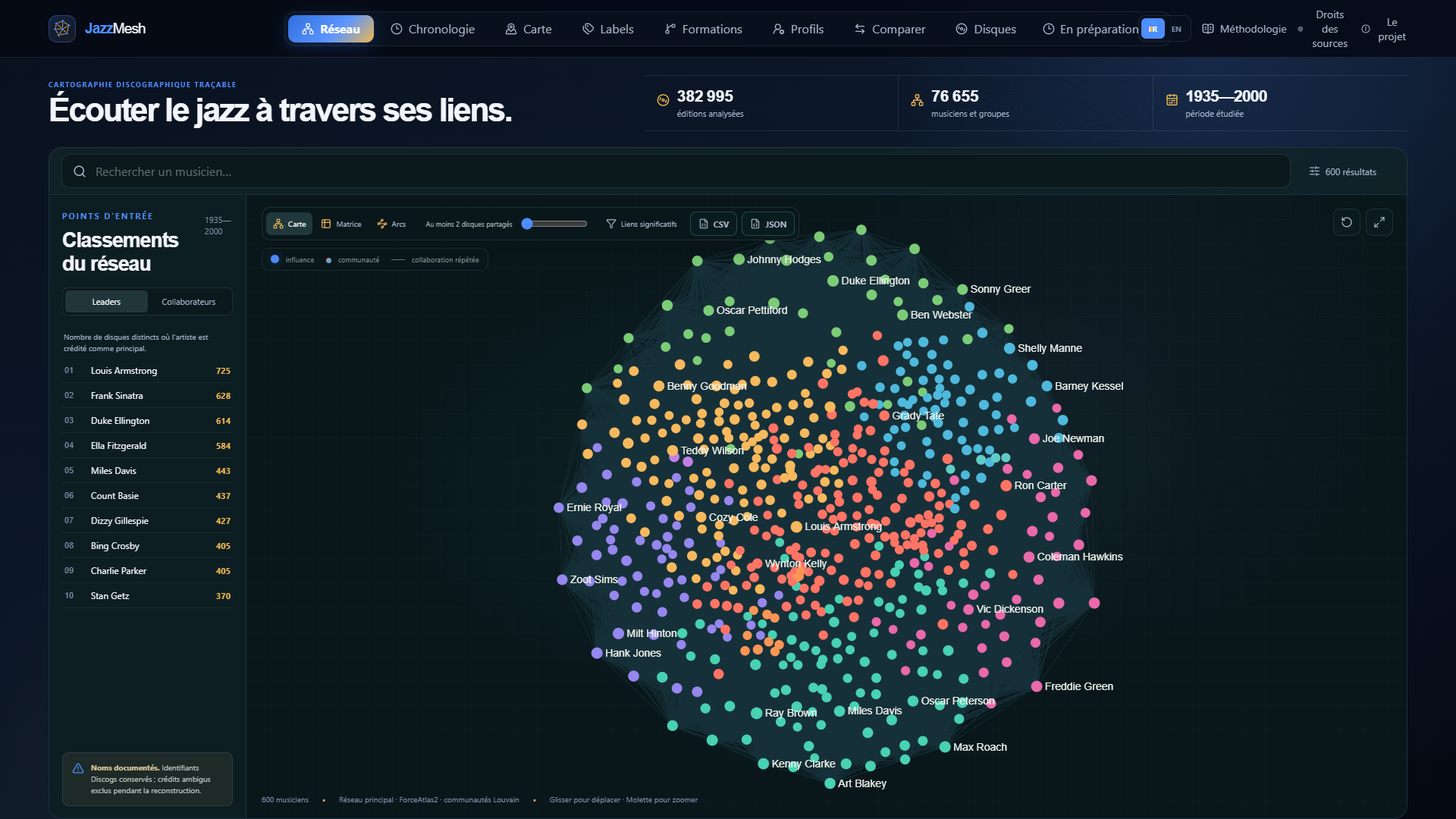
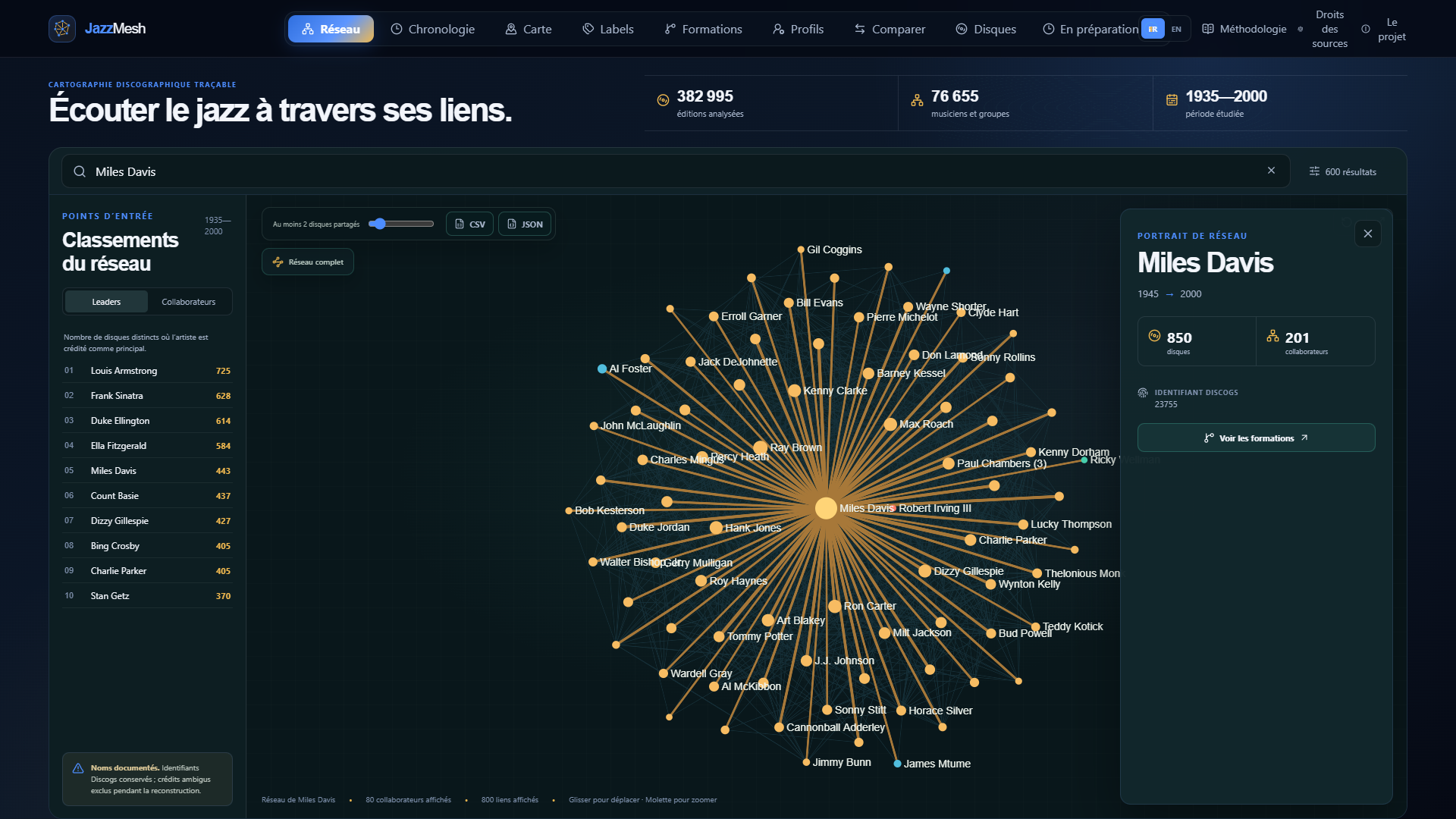
A Miles Davis search opens a local network: the selected musician sits at the centre and credited collaborators appear around him. Visual distance aids reading; it is neither an aesthetic judgement nor a measure of influence.
Look for names you already know, repeated shared-record links and musicians positioned between groups. The latter often offer the most productive exit toward another repertoire.
Follow a verifiable relationship
A JazzMesh link means that two public identities were credited on at least one common record within the published corpus. Its thickness counts shared discographic objects in the view; it does not measure a human or artistic bond.
Open a collaborator, inspect the shared records and make that person the new centre. The route becomes useful when it moves away from the starting name while preserving an explainable chain of credits.
Turn the graph into listening
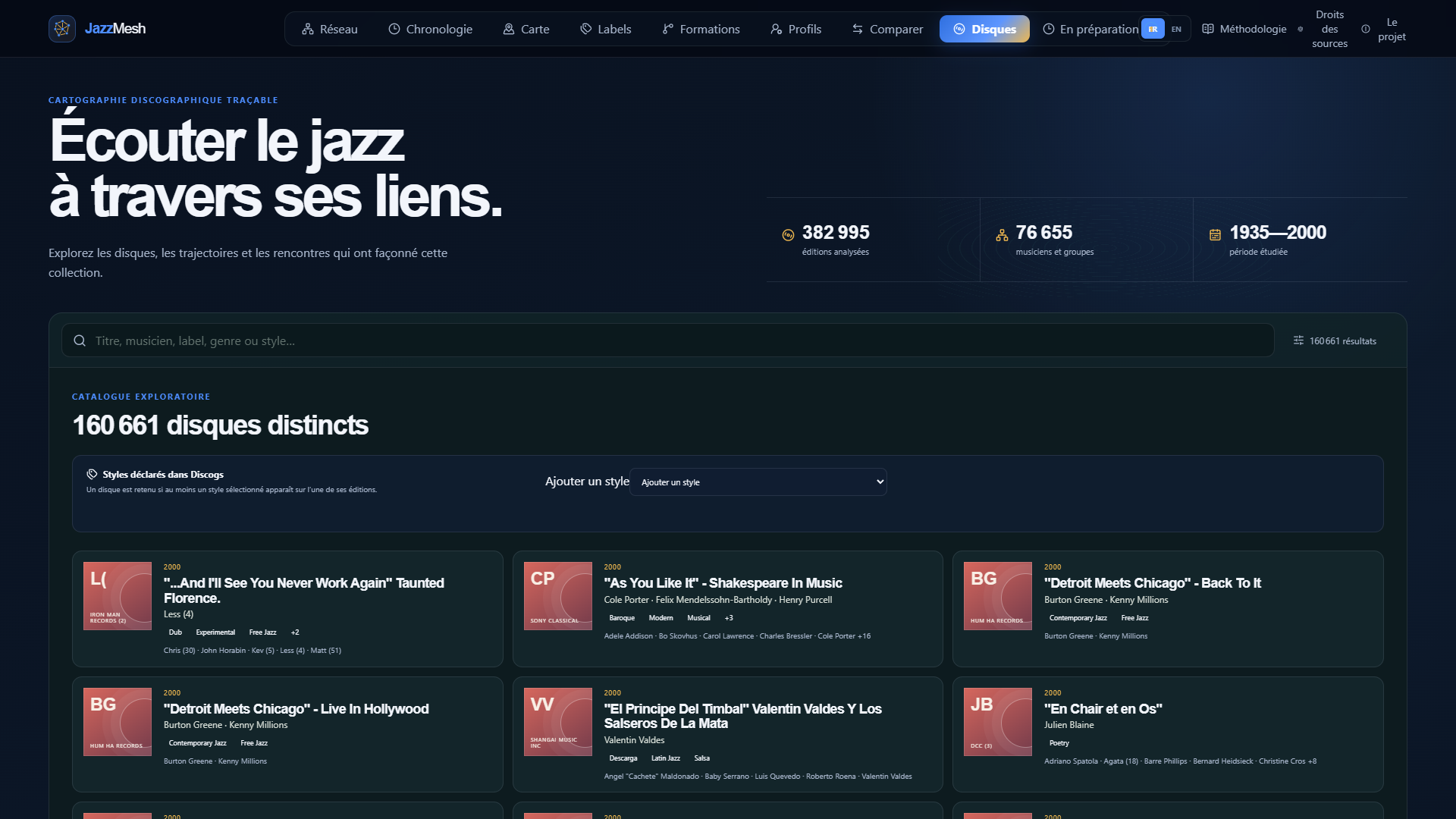
Choose one record at each step and write down the path. You obtain an argued listening sequence rather than an opaque recommendation.
JazzMesh does not claim that the records sound alike. It shows why they can be connected: a person, a line-up, a label or a documented succession of collaborations.