What is a community?
A group of names more frequently connected within the corpus. It is a calculated result, not an official aesthetic school.
JazzMesh stories
How to read communities, bridges, line-ups and labels.
Network portraits show how musicians, line-ups and labels organise around recorded collaborations. They make stable cores, bridges and changes of context easier to see.
What a network can reveal
A group of names more frequently connected within the corpus. It is a calculated result, not an official aesthetic school.
A musician whose credits connect several groups of collaborators. The precise role must then be checked record by record.
Importance calculated for the displayed view. It does not measure talent, fame or absolute historical influence.
Stories
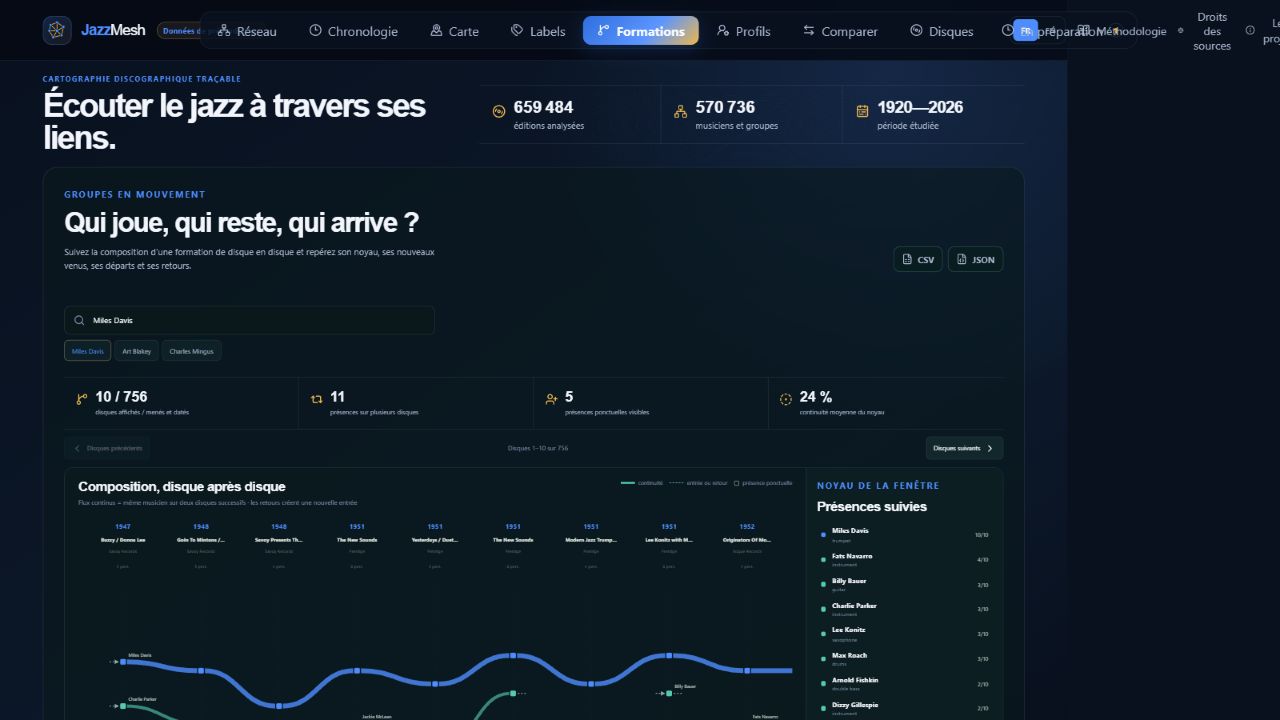
From bebop to the electric groups, the graph reveals less a sequence of styles than an exceptional ability to bring together, separate and recirculate communities of musicians.
Read the story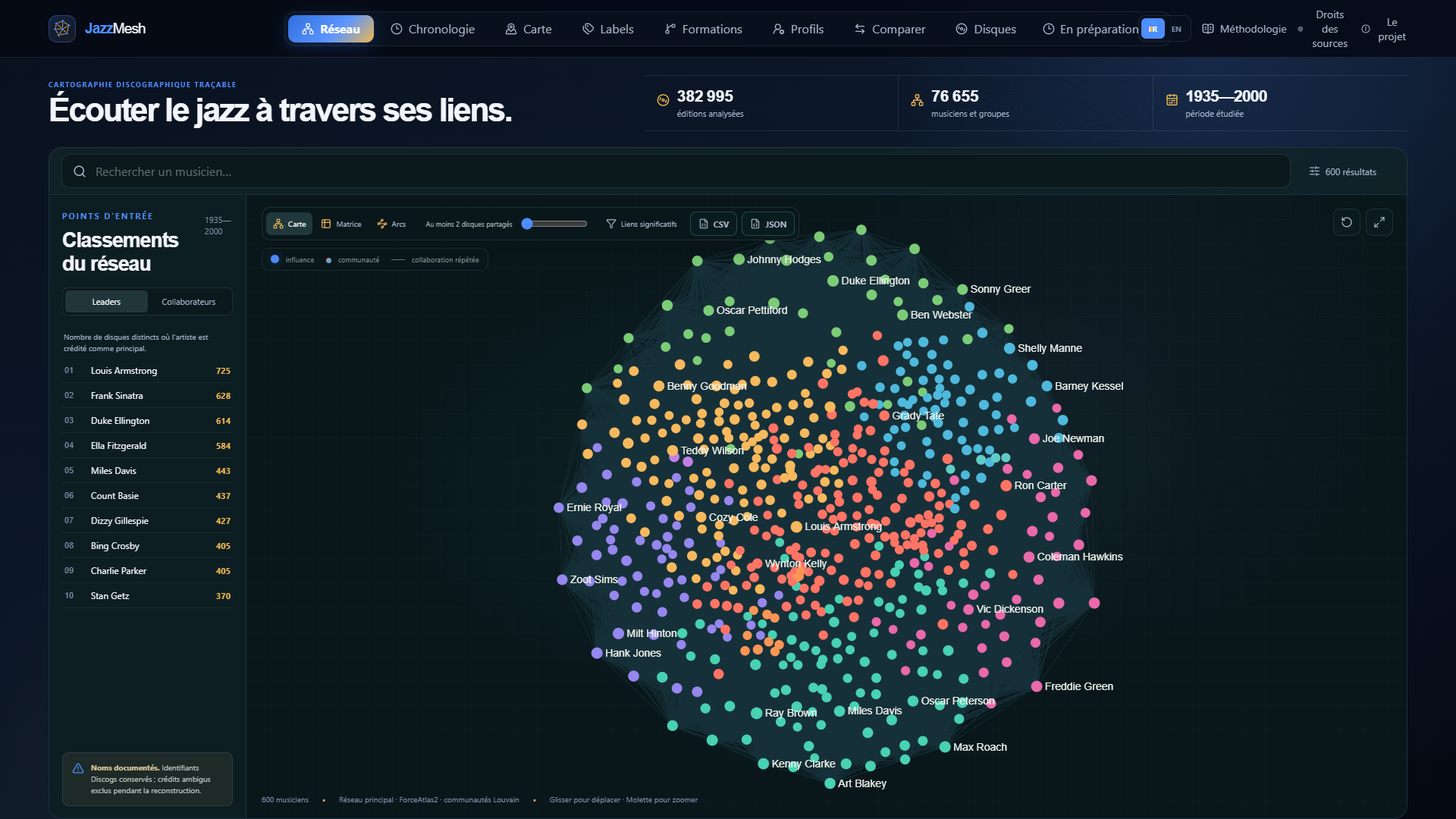
Why some musicians connect distant-looking communities—and what the graph can genuinely support.
Read the story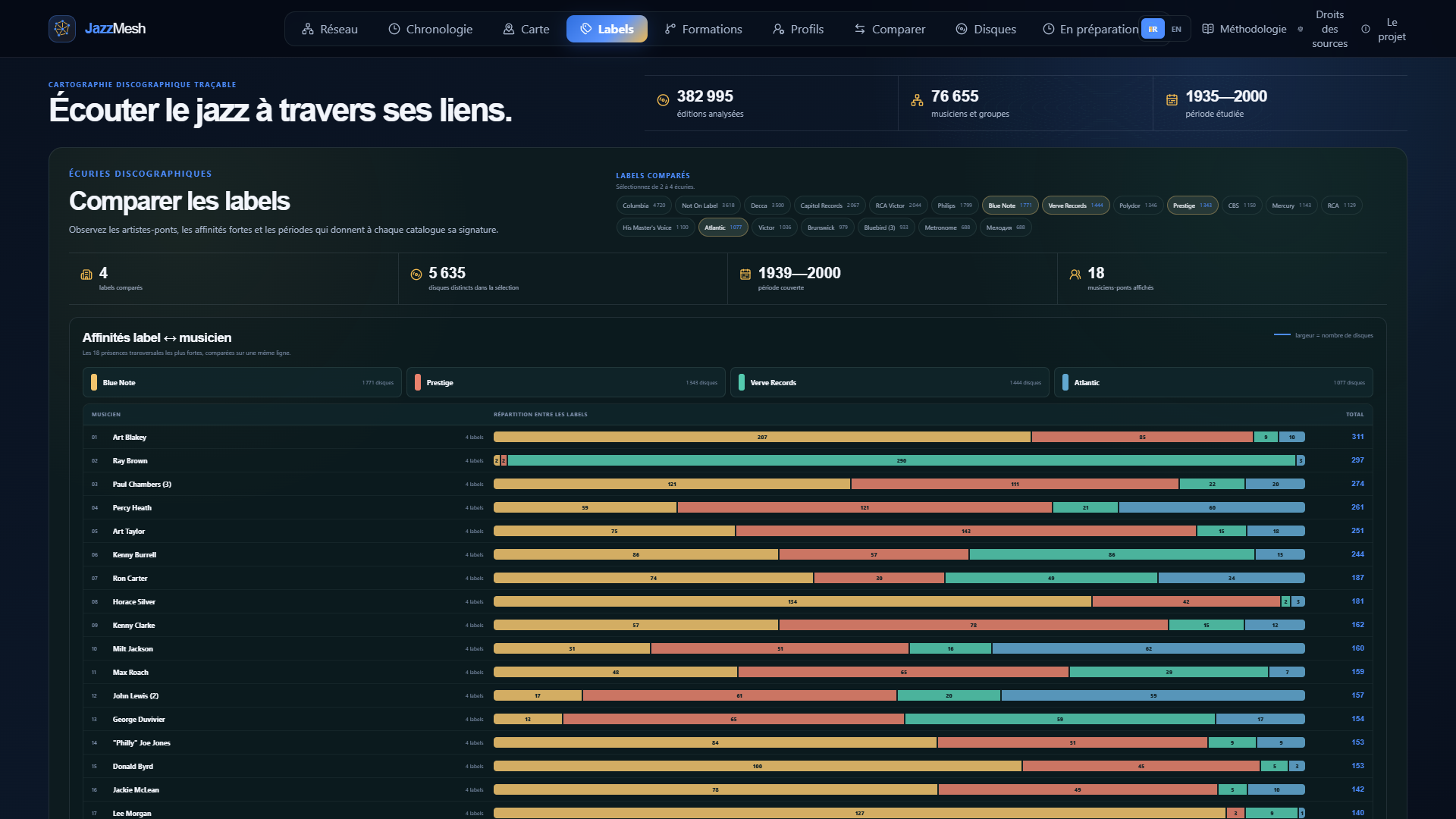
Compare catalogues without reducing their identity to a volume ranking.
Read the storyStories
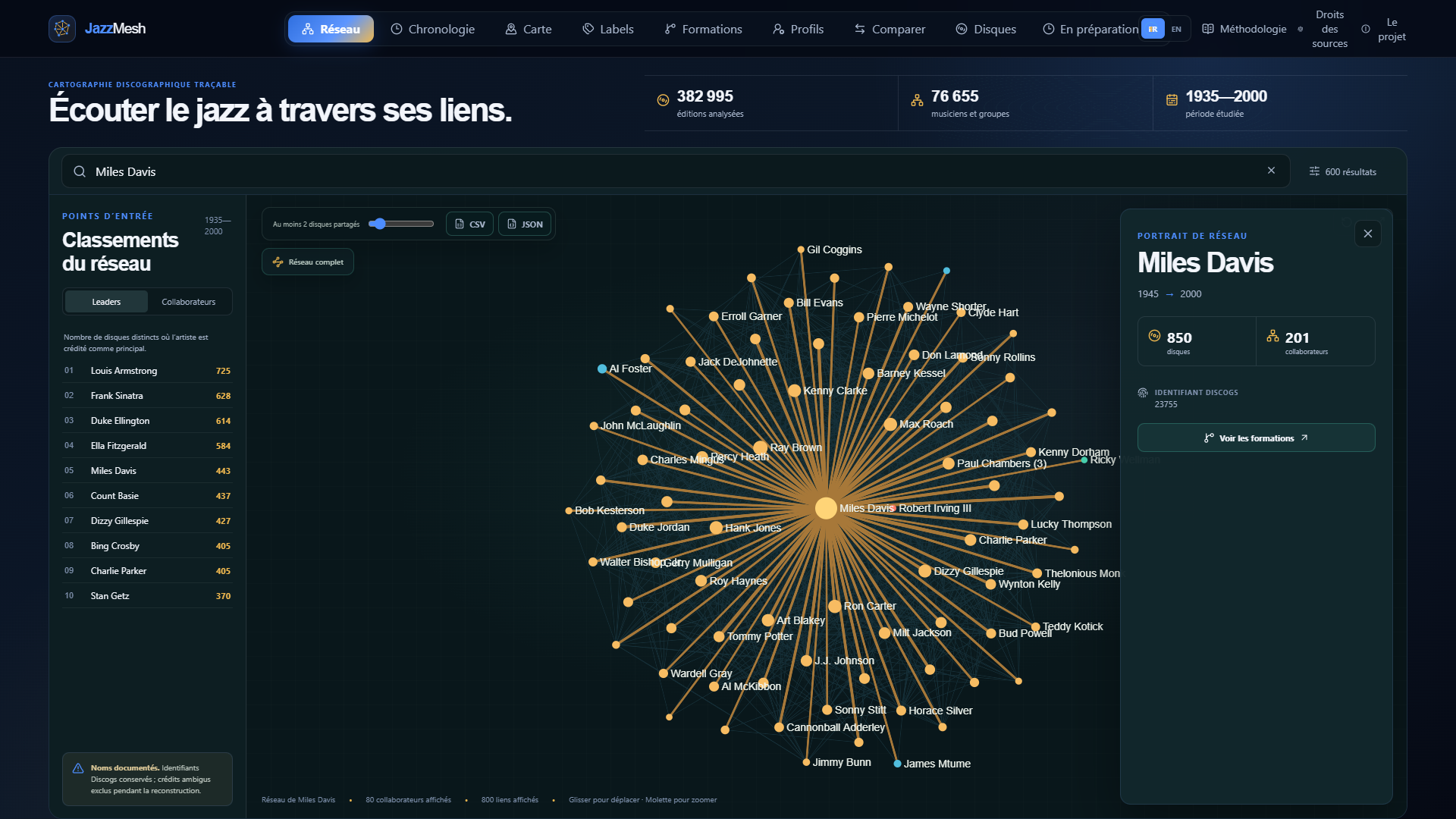
A four-movement guide to starting with a familiar name without remaining inside one discography.
Read the story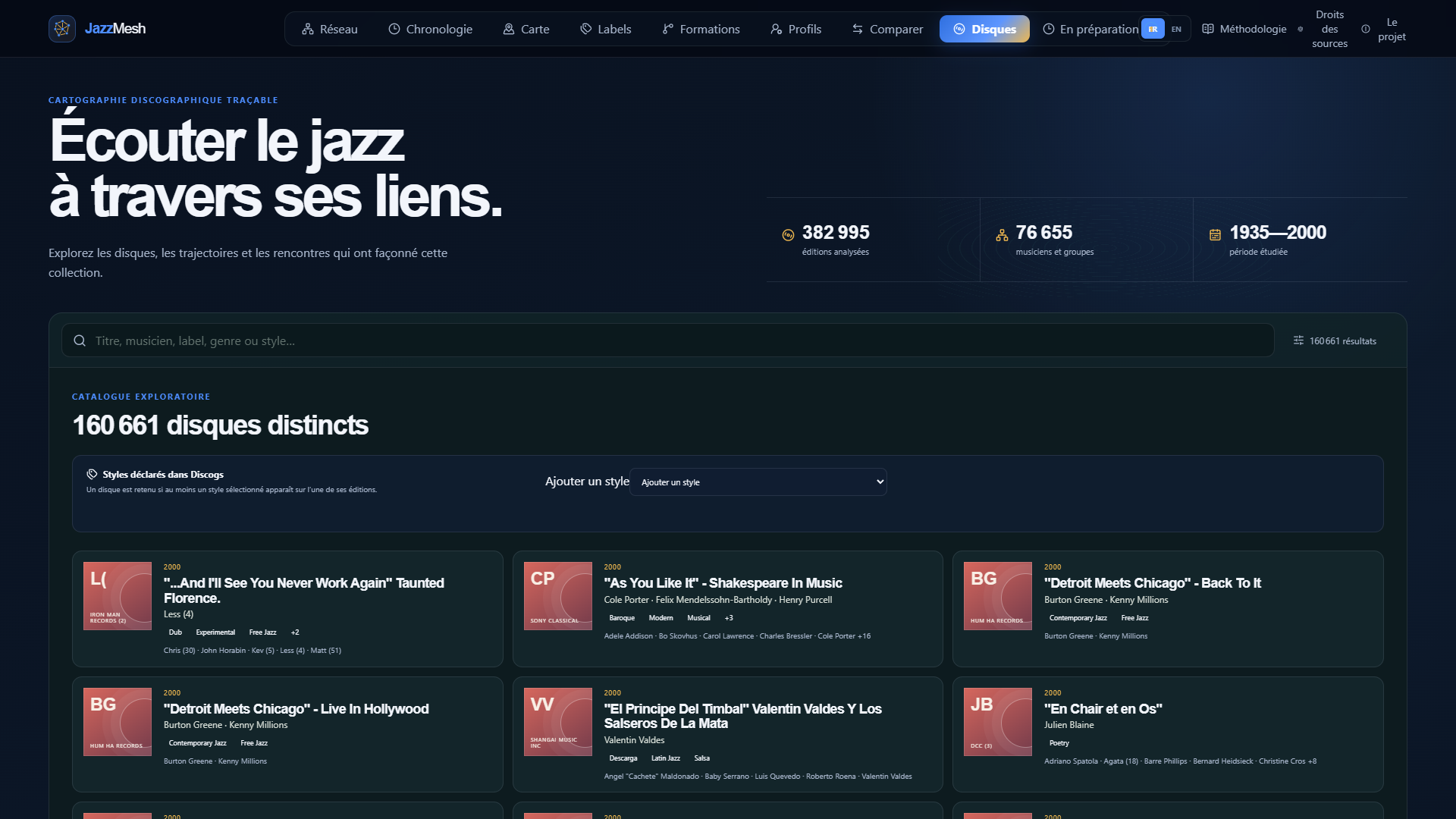
Start with a record you love, read its credits and branch into another musical story.
Read the story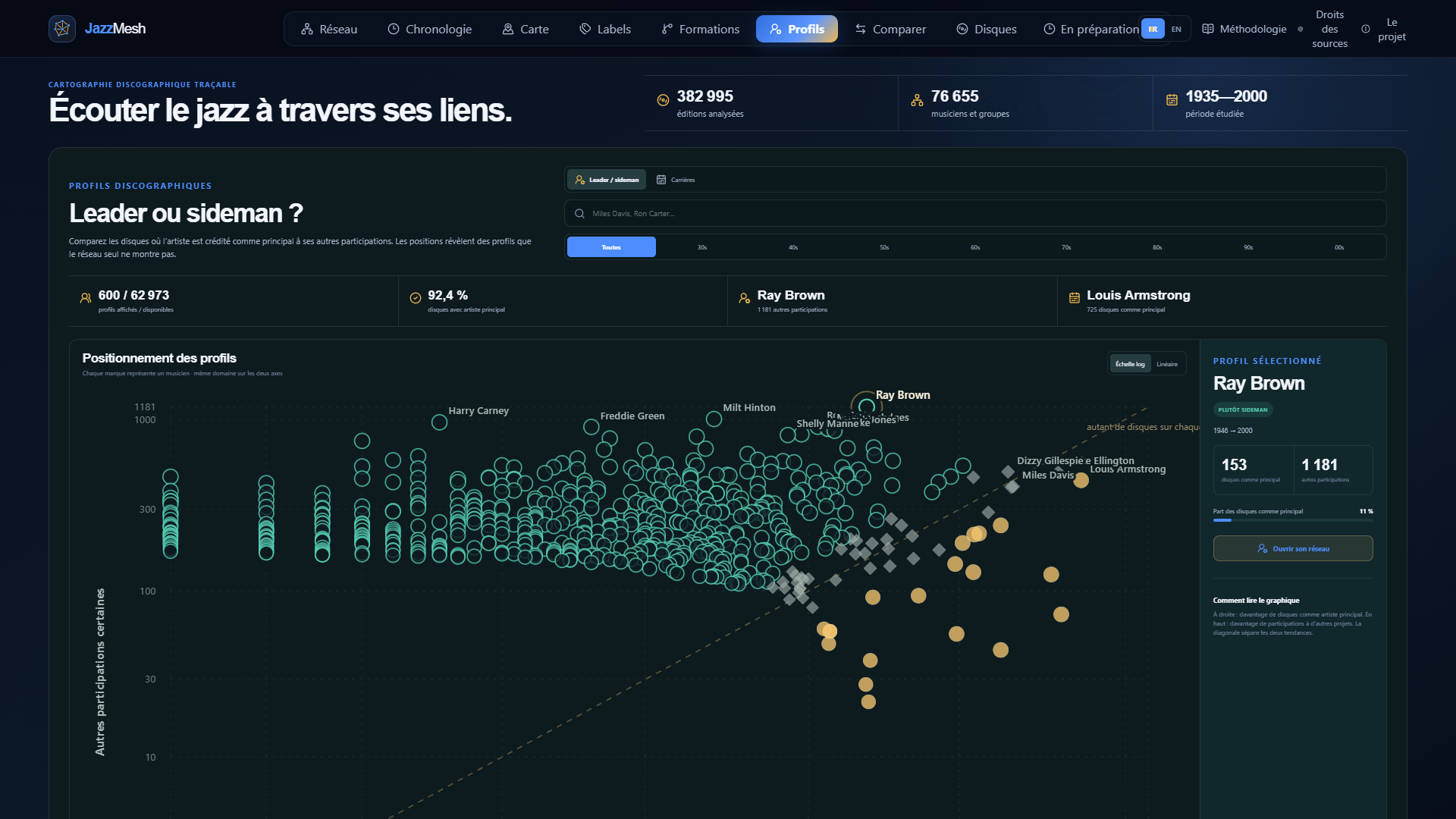
Leader, collaborator, group and role: what metadata can support—and what it leaves unsaid.
Read the story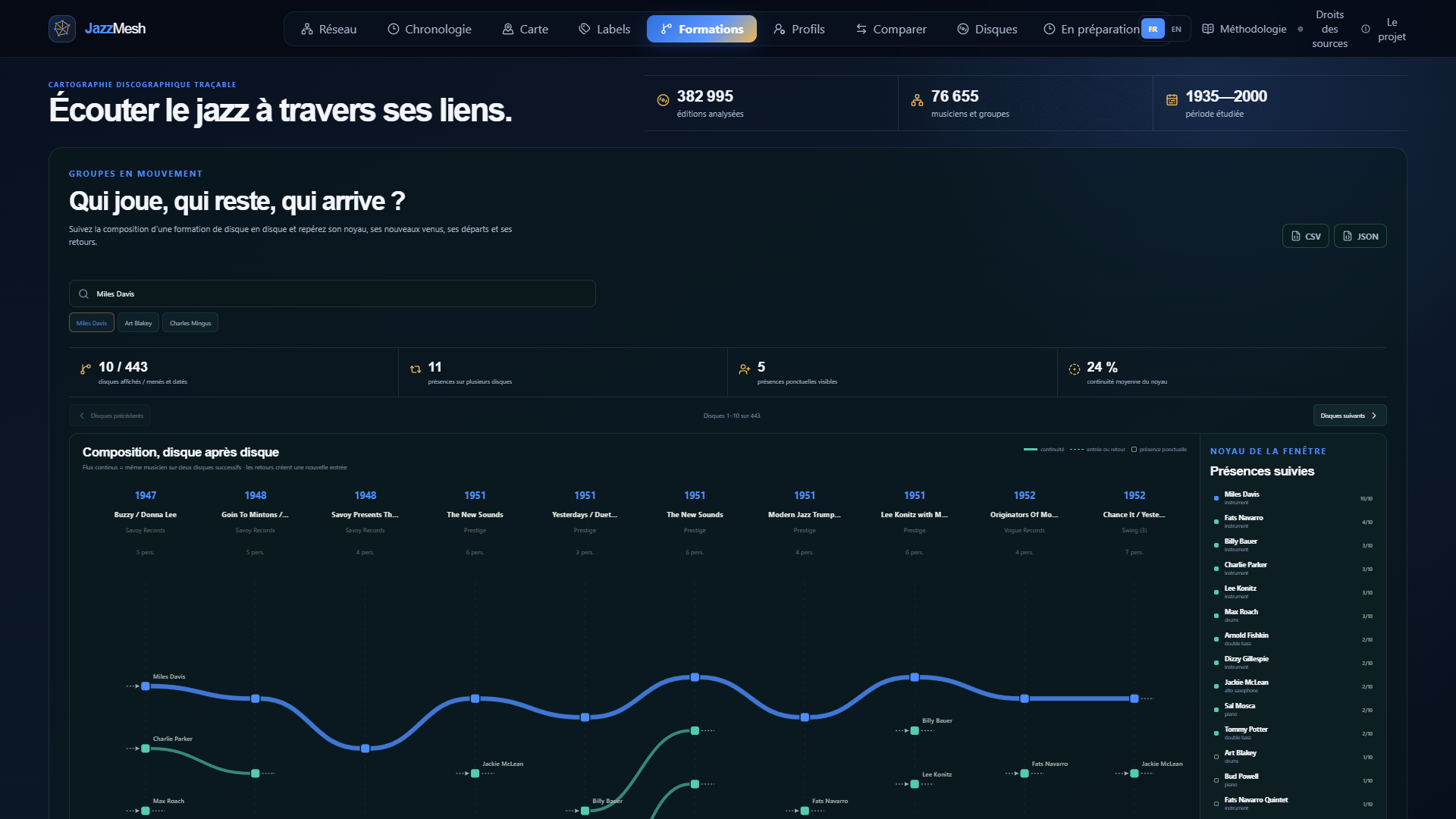
Read continuity, arrivals and returns without confusing release chronology with studio chronology.
Read the storyUnderstand the difference between 659,484 observed editions and 334,465 grouped discographic objects.
Read the storyFrom data dump to visualisation: the decisions that make an exploration explainable and revisable.
Read the story