Where does the data come from?
Every publication names its sources, scope and the rights governing reuse.
JazzMesh stories
JazzMesh methods, editorial choices, limits and corpus updates.
The project journal documents how JazzMesh is made: corpus choices, identity work, visual design, corrections and limits. It exposes decisions hidden behind an apparently simple visualisation.
What the journal makes verifiable
Every publication names its sources, scope and the rights governing reuse.
The journal describes the selection, grouping and calculation rules that turn credits into visible links.
Uncertain cases are isolated, documented and corrected without presenting them as editorially validated facts.
Stories
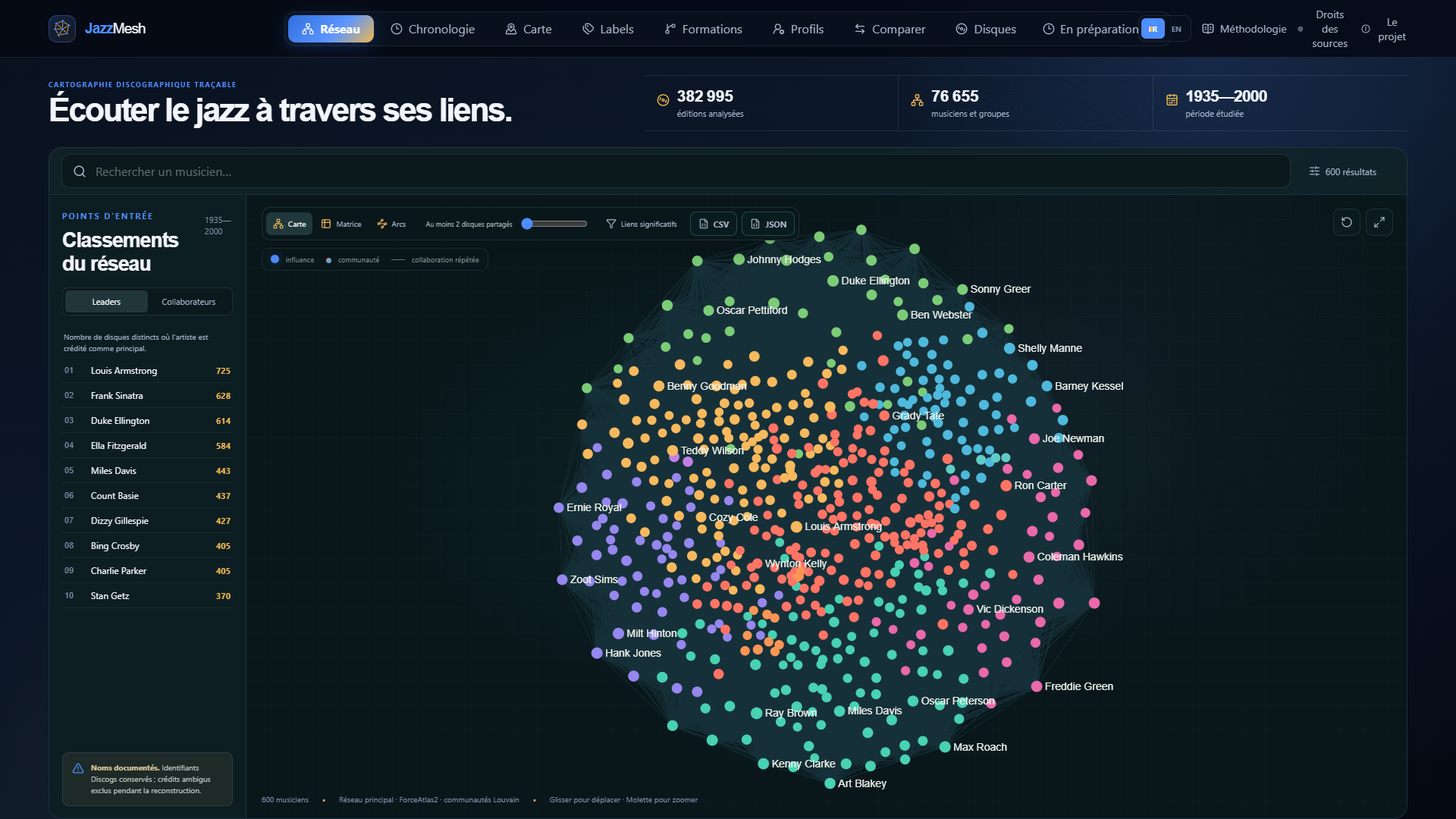
From data dump to visualisation: the decisions that make an exploration explainable and revisable.
Read the storyStories

From bebop to the electric groups, the graph reveals less a sequence of styles than an exceptional ability to bring together, separate and recirculate communities of musicians.
Read the story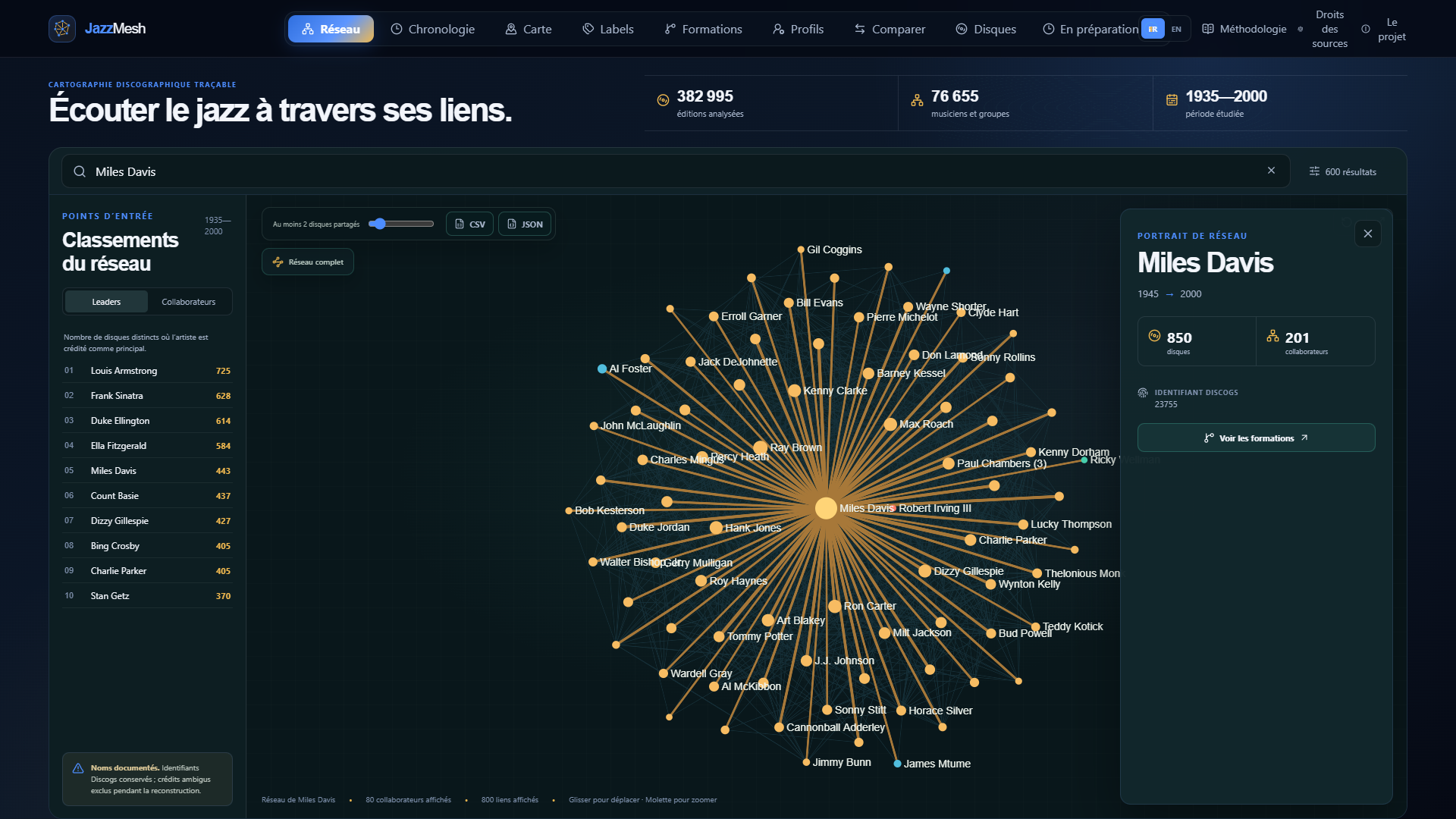
A four-movement guide to starting with a familiar name without remaining inside one discography.
Read the story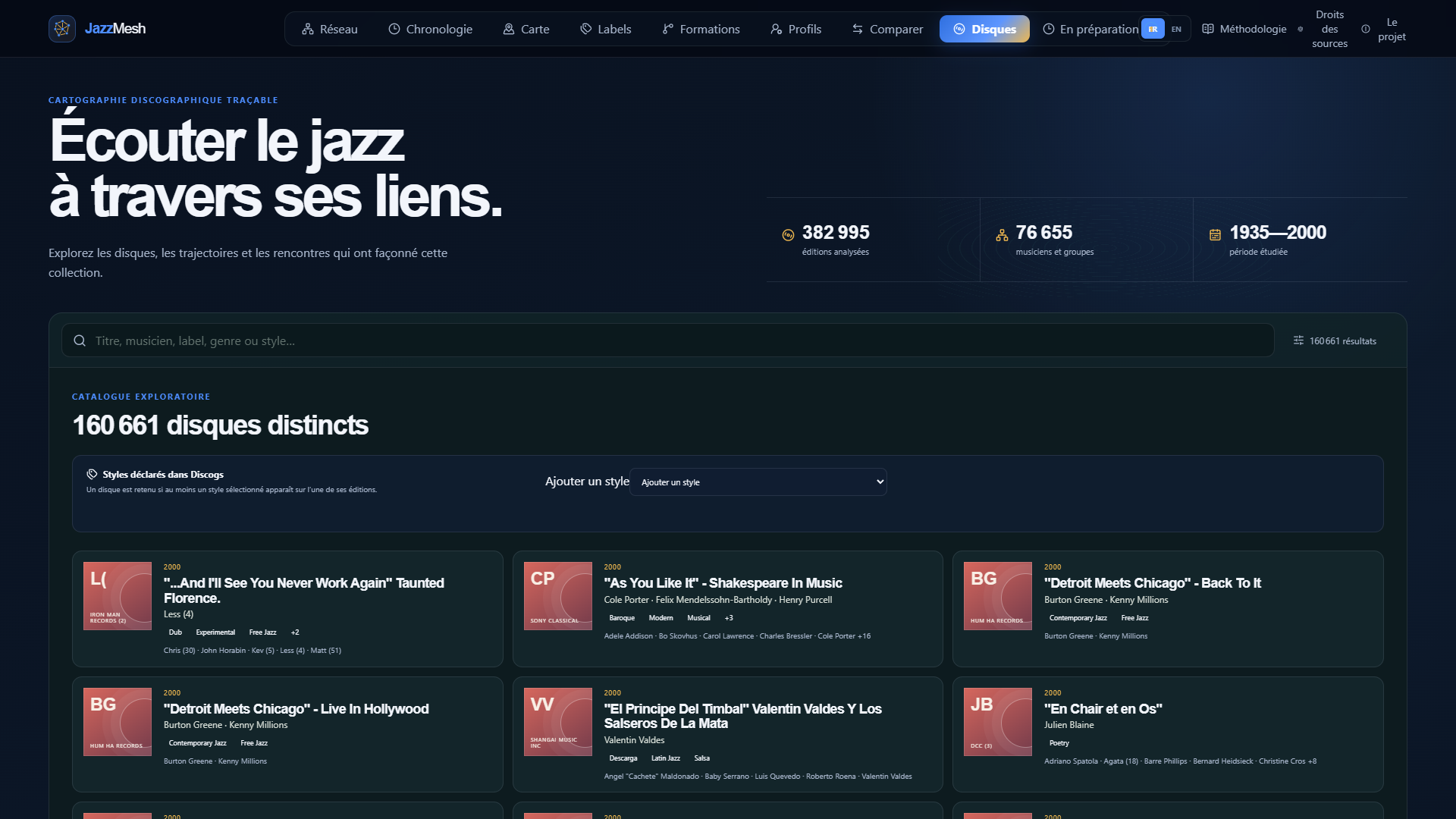
Start with a record you love, read its credits and branch into another musical story.
Read the storyWhy some musicians connect distant-looking communities—and what the graph can genuinely support.
Read the story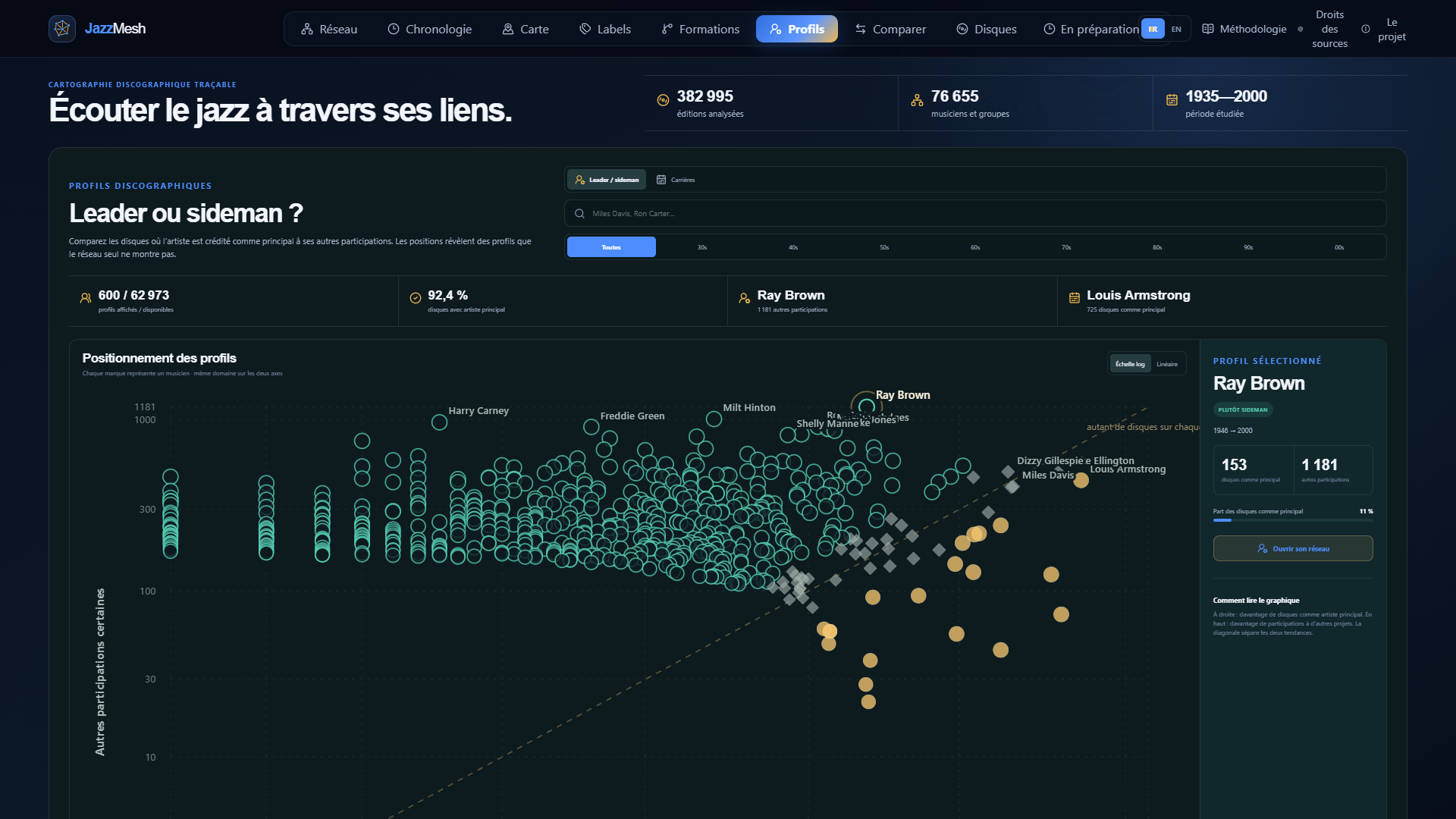
Leader, collaborator, group and role: what metadata can support—and what it leaves unsaid.
Read the story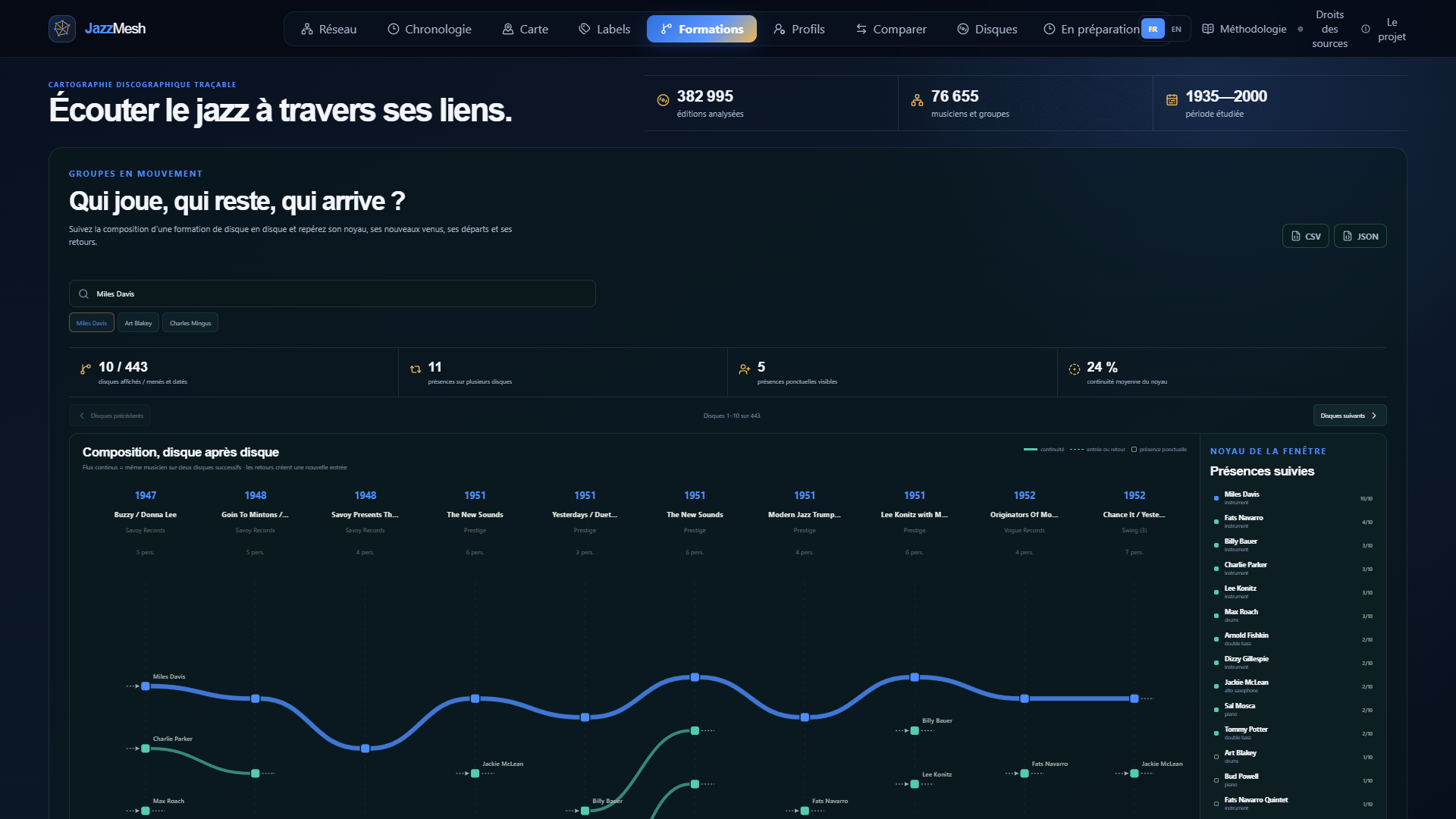
Read continuity, arrivals and returns without confusing release chronology with studio chronology.
Read the story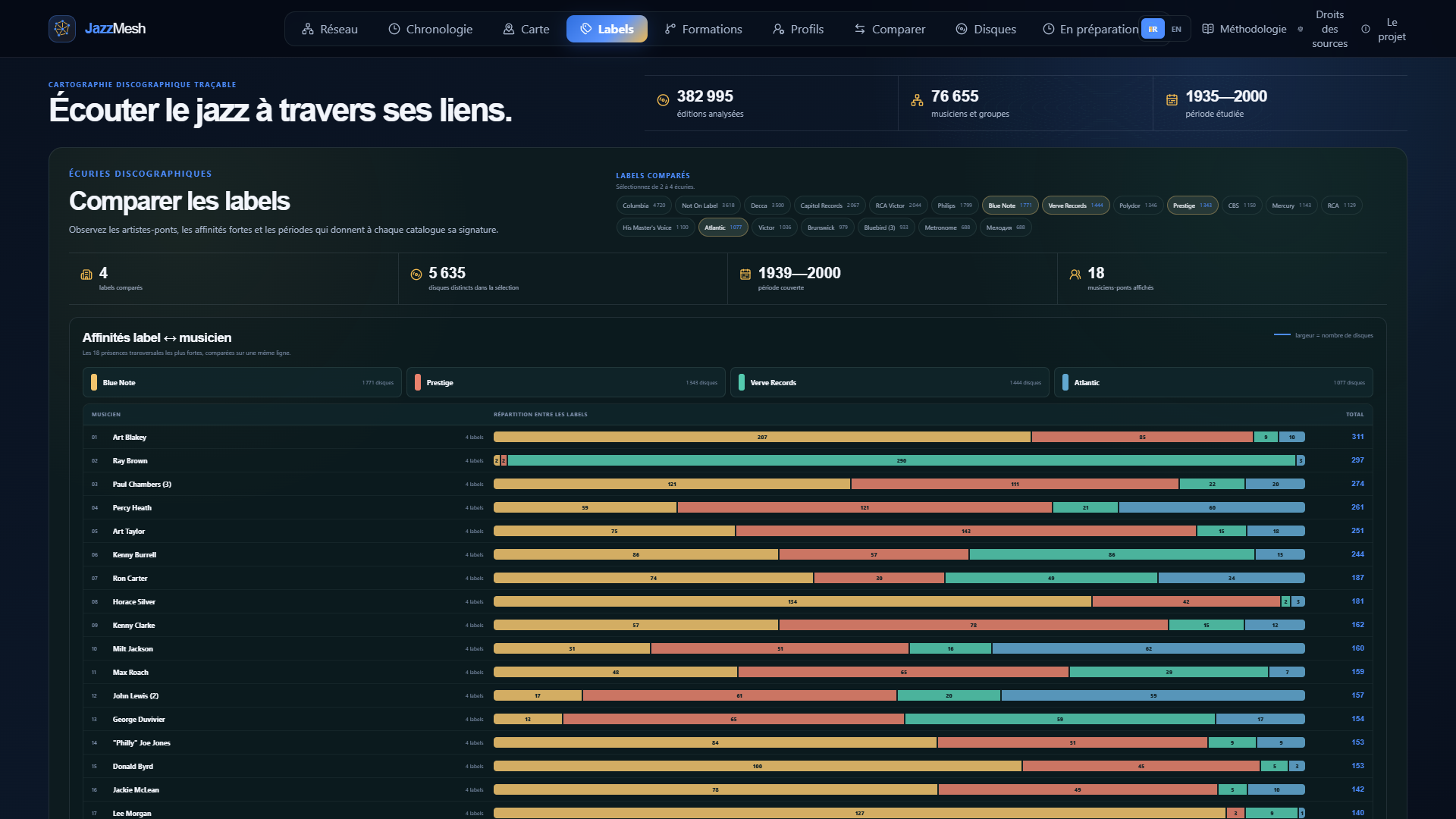
Compare catalogues without reducing their identity to a volume ranking.
Read the storyUnderstand the difference between 659,484 observed editions and 334,465 grouped discographic objects.
Read the story