A credit is a published trace
A credit associates a public name with a release in the source. By itself it says nothing about time spent in the studio, artistic weight, payment or quality of contribution.
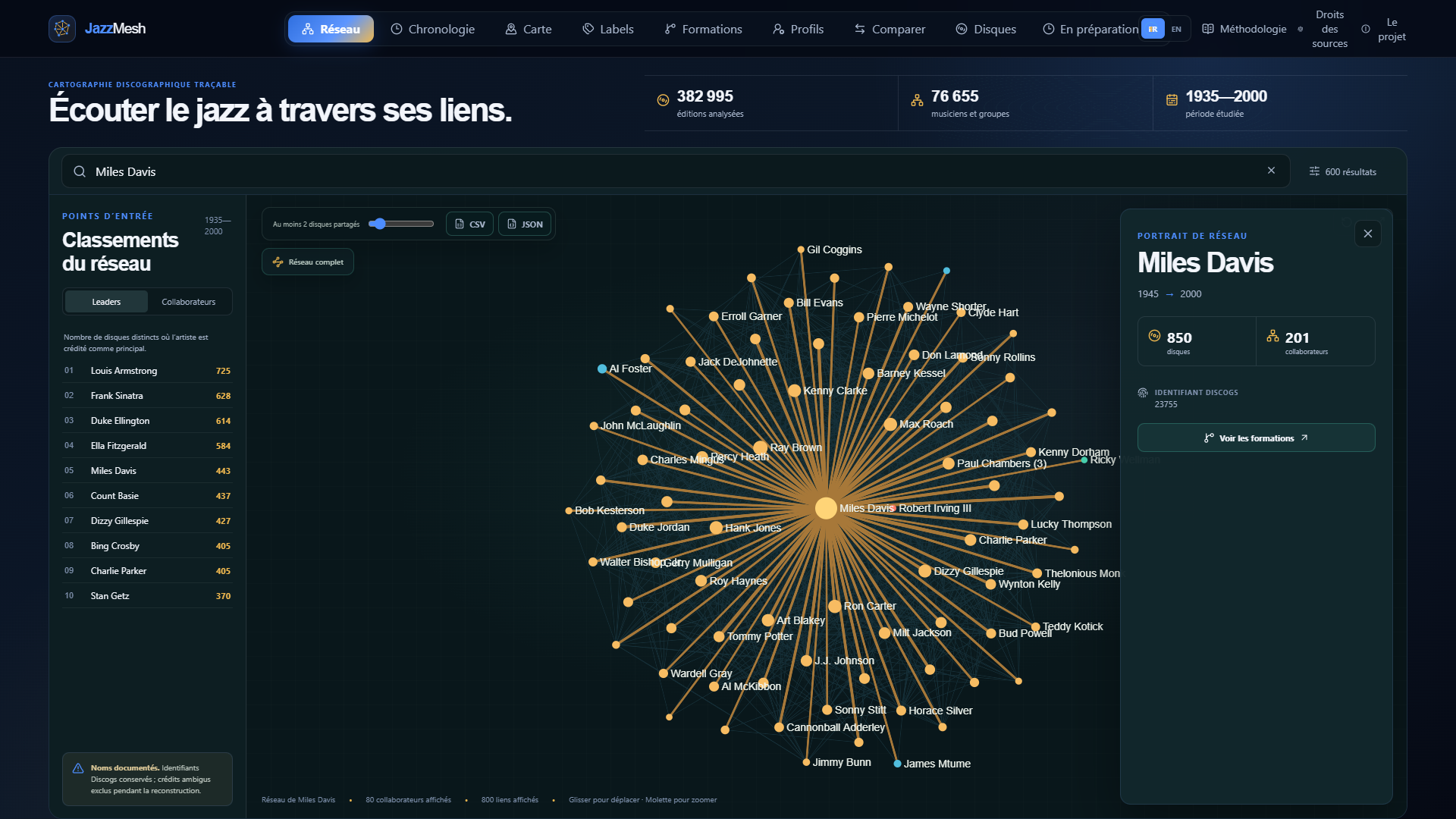
JazzMesh keeps that distinction: it represents documented co-credits and computes relationships between public identities.
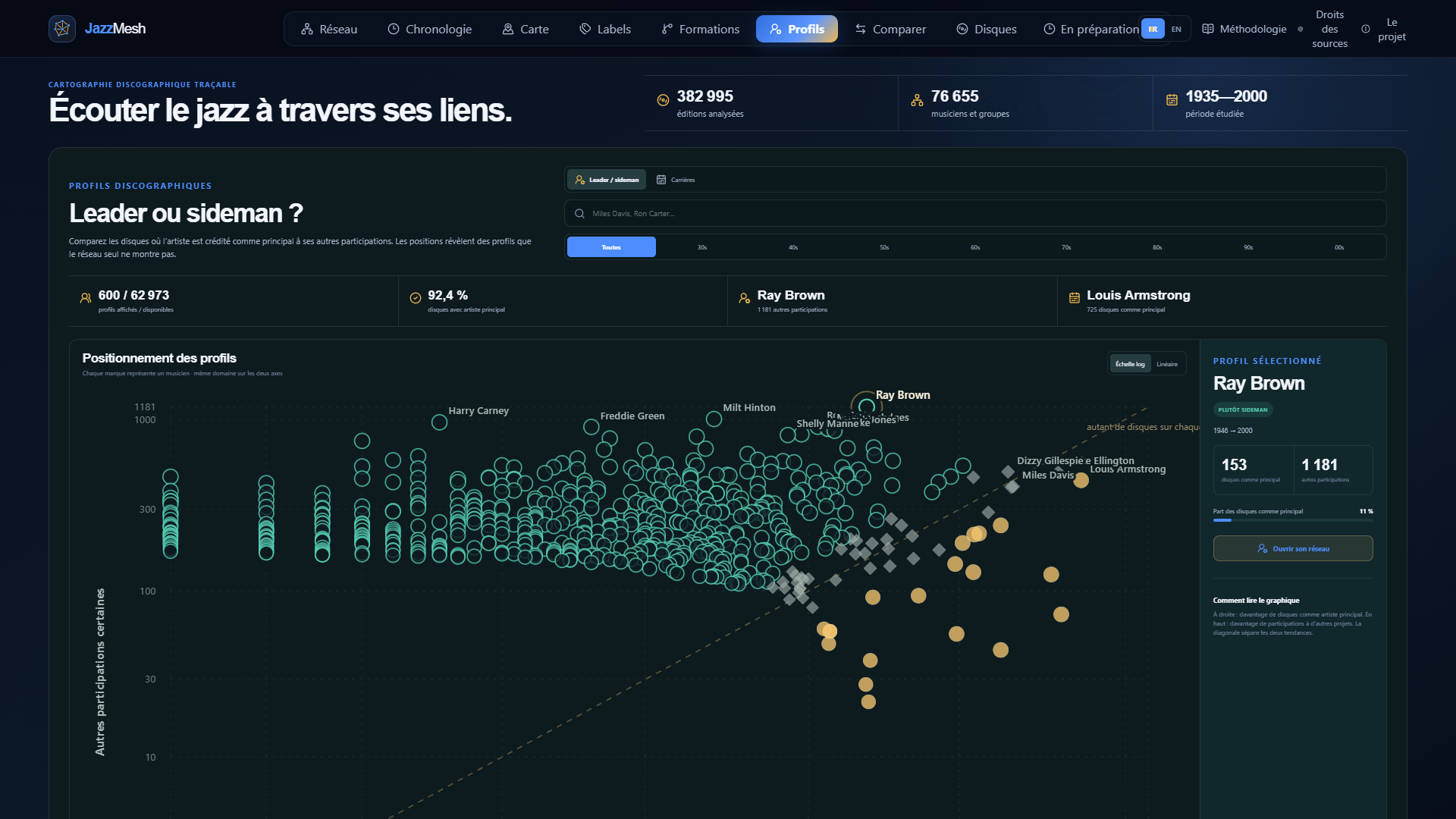
Leader and collaborator are complementary views
The Profiles view separates records primarily attributed to an artist from those on which that person appears among the participants. It makes a trajectory legible without claiming to summarise an entire career.
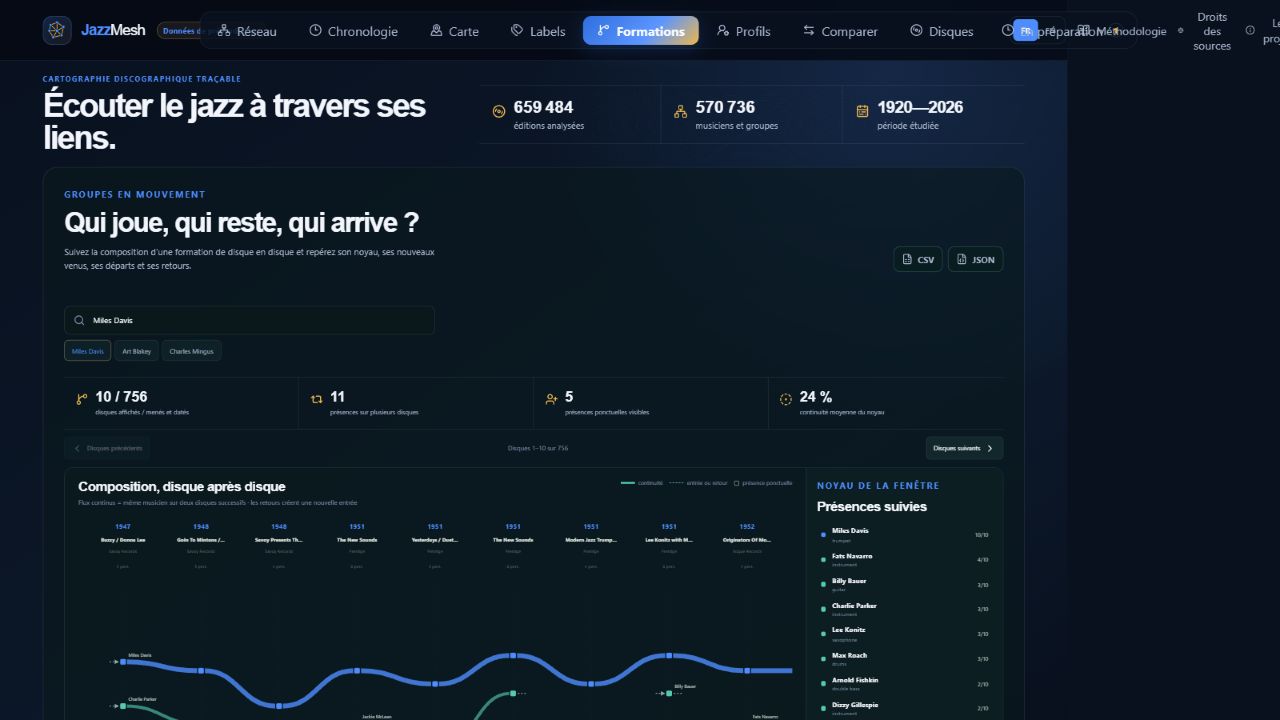
Groups require special care: a collective name and its members are not interchangeable. Identities are joined only when the anchor is sufficiently certain.
Read credits in context
Before citing a relationship, check the record, release year and role when available. Historical research should then draw on sources devoted to sessions and biography.
The network is an orientation instrument. Editorial evidence remains a combination of credit, identifier, source and explicit scope.